The Penny Black is Best Indie Film of 2020 says Go Indie Now

#1 THE PENNY BLACK – DOCUMENTARY (USA)

SYNOPSIS:   Will, the estranged son of a con man fights temptation, paranoia, and his own nefarious legacy after being left with a mysterious, million-dollar stamp collection.

WHAT THIS FILM DOES WELL: Documentaries have made incredible strides. Some have been so avant-garde and so unique that they almost don’t feel like documentaries but more like narratives. That’s where The Penny Black is different.  It uses the conventions and standard devices of a documentary–like captured raw footage, reenactments, close ups, interviews, and time lining–and spins the most unique, unexpected story that reads, looks, and feels like a noir piece. It is riveting, interesting, twisting and turning, and just as you catch your breath the roller coaster ride sends you for one more drop.

Screen Shot 2020-12-22 at 1.17.46 PM.png

Beyond all that, what Alexander Greer and Joe Saunders do better than maybe anyone I have ever seen, is present all of the facts as they need to. They never infiltrate the sacred mark of demarcation that often has been done in Documentaries like this one that have so much going on in them. Moreover there are shots in this film composed like works of art–that work like we are spies infiltrating the secret criminal lair, only we never really know who the bad guy is. We are being told who it might be and why, but Will is so unreliable and so scary-good at being our narrator, investigator, and navigator that you become equally enthralled and frightened by him.

The viewer is left to feel unsatisfied, even when the conclusion and evidence presents itself because Will just simply makes you question it all. There are moments when you aren’t even sure you are looking through the lens of a camera as that camera stays on its subject and marinates for you like a hot off the grill steak you want to devour but know it has to rest first. Often in this film that questioning and fierce desire to know more brings you to believe one way or the other but never with certainty, and dare I say it makes you want to learn more about stamps. How the fuck did it pull off a magic trick like that? I don’t know, and the best part of this 90-minute plus journey for me is I don’t care because, damn, this movie was so fucking good.    

~~~

And that is going to do it for this look back at the world of indie film in 2020. Until next time, check out GoIndieNow on YouTube and Twitch, and be sure to subscribe if you want to stay up-to-date on all things indie!


See the top ten films of 2020 here.

The Lens REVIEW The Penny Black

by Kayla McCulloch on Nov 20, 2020

There’s nothing like a good anecdote. While this scenario might seem like a distant memory in the depths of the Covid-19 pandemic, there was a time not long ago when a strange-but-true story could grab the attention of a room and linger in listeners’ minds for days. That’s how The Penny Black director Joe Saunders came to know Will, the enigmatic figure who would soon find himself at the center of one of 2020’s most riveting documentaries: at a dinner party, where the two men were introduced by a friend of a friend of producer Alexander Greer. Will’s strange tale about a weird neighbor, a million-dollar duffel bag, and an unexplained disappearance quickly captivated the group. At first, Saunders figured the story would make a decent short film. Five years later, the director has created a twisting, turning feature-length docudrama that grips the viewer like glue and never loosens up.

“ONE OF 2020’s MOST RIVETING DOCUMENTARIES”

Like other sensational documentaries from recent years that need to be seen to be believed, such as Tickled (2016), Three Identical Strangers (2018), and global sensation Tiger King (2020), the less a viewer knows about The Penny Black, the better. For this reason, its initial setup — the same premise that hooked Saunders during that party — will have to do. Will lives in Los Angeles, hails from Minnesota, and works in the advertising industry, but all the most interesting gossip in his life is about his neighbor. An intimidatingly buff Russian gentleman with long hair, a thick accent, and a smoking habit to match Will’s, this neighbor occasionally makes small talk but mostly keeps to himself. Roman is his name, according to Will. Through their handful of conversations veiled in cigarette smoke, he is able to surmise this much: Roman is a “contractor” and he has a family in LA and a family in Arizona. There are people constantly coming in and out of Roman’s apartment, even when the man disappears for weeks at a time (presumably visiting with his second family).

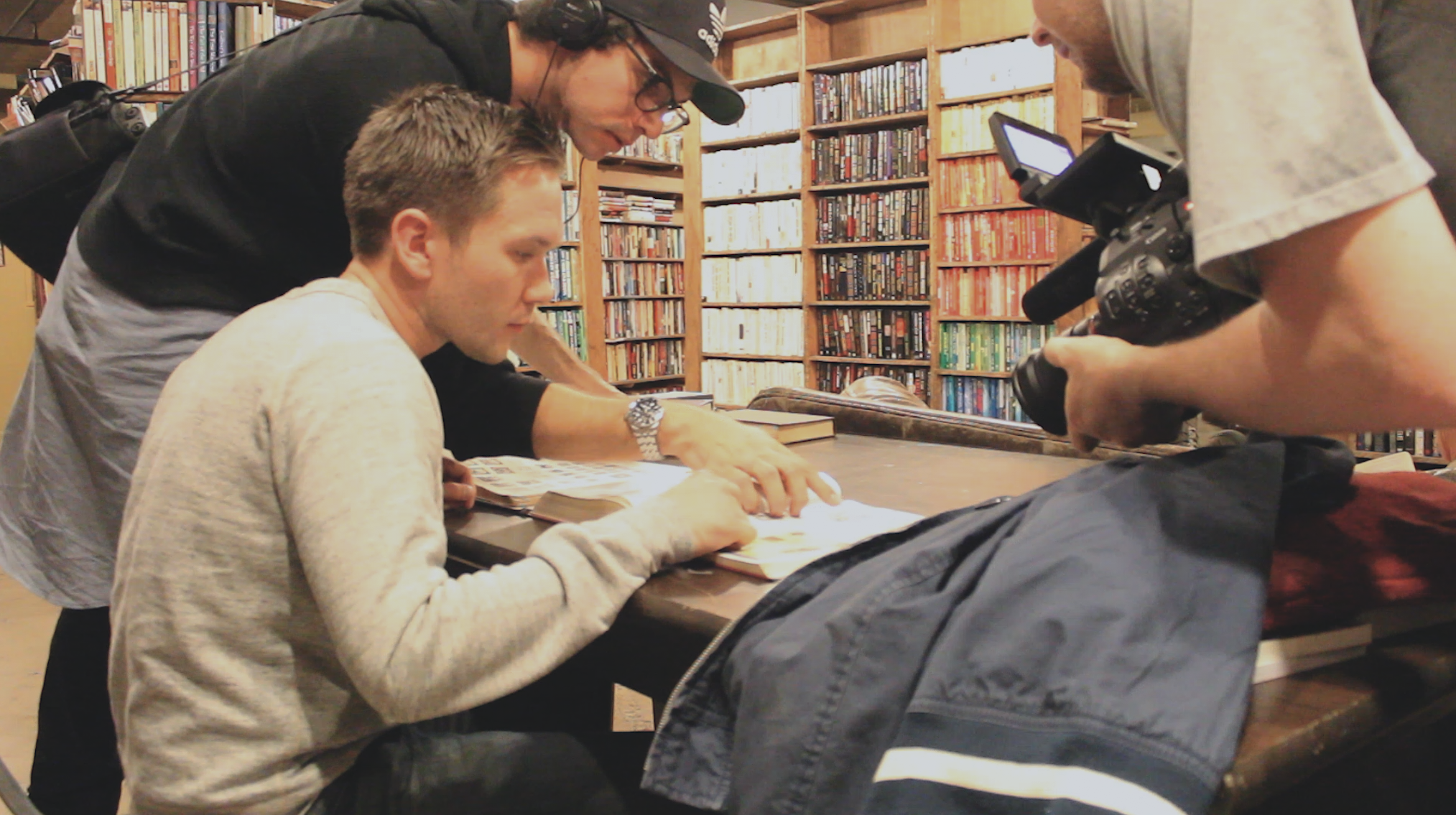
Filmmakers Alex Greer and Joe Saunders film The Penny Black subject, Will Cassayd-Smith

Filmmakers Alex Greer and Joe Saunders film The Penny Black subject, Will Cassayd-Smith


Although leading a double life and allowing heavy traffic into an apartment at all hours of the night isn’t exactly what you’d call normal behavior, Will isn’t explicitly worried about anything specific. That is, until an alarmingly inebriated Roman presents him with a library of binders and books crammed inside a hefty tote and tells him to conceal them from everyone but Roman’s mother. Inside the bag are hundreds of thousands of dollars’ worth of rare postage stamps, each one meticulously cataloged and preserved for safekeeping. Blindsided, Will accepts. This is the point where director Joe and producer Alex meet their subject, and this is the point where the story takes a turn into the unimaginable. Suddenly thrust into a scheme that potentially spans generations of con artists, thieves, and maybe even murderers, Will and his shoestring crew set out to find answers to questions that they’re hesitant to even ask in the first place (especially when they turn introspective).

Fittingly dubbed a “documentary noir” by its filmmaker, Will’s search for answers through the underbelly of Los Angeles, million-dollar MacGuffin at his side, is a journey that toys with the mysterious crimes, the moral ambiguity, the low-key aesthetics, and the sinuous storylines viewers have come to expect from a film noir. If one substitutes Humphrey Bogart with a forlorn ad man from Minnesota, drops Peter Lorre for a stamp-hunting, chain-smoking Russian, and swaps the femme fatale for moped-riding, hidden-camera-wearing private investigator, they’ll be halfway to grasping the sheer madness of The Penny Black. Given the half-decade of time, money, and resources they poured into the film, it’s apparent that Saunders and Greer knew Will’s story was too good to pass up. By maintaining a perceptive camera and employing a keen intellect over the years, Saunders paints a portrait as American as film noir itself: one of depravity, corruption, greed, and deceit. It might not be pretty, but good luck tearing your eyes away from it.

We Are Movie Geeks

Review of THE PENNY BLACK by Stephen Tronicek:

William J. Saunders The Penny Black is a case study in the way that association can create tension in Film. The story and the players are simple: Will is left with a bag of expensive stamps by his neighbor Roman. In the ensuing days, Roman disappears. Throughout the course of The Penny Black Will attempts to find Roman. 

dad at desk.jpg

    The steps of Will’s journey aren’t, on the surface, particularly compelling. Will goes to stamp conventions, visits a private investigator, and even has to have a run-in with an old girlfriend. Much like most long-term tasks, the name of the game is monotony…but the film never actually feels that way. 

    This is achieved simply by Saunders and crew, who decide early to frame the whole event through Will’s past experience. Much of the early runtime of the film is made up of Will describing the experiences he had with his con-man father. Through the trauma that he inherited from it.

“a case study in the way that association can create tension in Film.”

    In the interest of documentary storytelling, this achieves two things: 1. It paints Will as a sympathetic protagonist and 2. It creates a framing device of tension for the entire film. Introducing this information creates the idea that these stamps could be a con job. Because the personal stakes of a con job are so high for Will, the personal stakes for the audience are high. By framing the rather monotonous process of the search for the Roman this way, The Penny Black becomes a compelling mystery. 

    A story of the mundane oddity of the world, The Penny Black is a great documentary to study for the framing of documentaries. Documentaries have to be dramatically compelling and Saunders and co. should be commended for making this one so.

The Penny Black: Curiosity Meets Authenticity

By Ian Simmons, The Newport Beach Independent

“The Penny Black” directed by Joe Saunders and produced by Alexander Greer (who grew up in Newport Beach) tells a hauntingly honest yet curious story that will leave viewers wanting to follow the story even further.

Immediately, we are introduced to Will, whom the story follows, and we learn that the story this documentary tells was introduced to Saunders and Greer only a day before filming started. Saunders and Greer grabbed equipment and a small crew, and began documenting a story unlike anything you’ve heard.

Screen Shot 2020-01-12 at 5.00.42 PM.png

“The Penny Black” begins as a look into a seemingly ordinary collection of stamps, but turns into a hunt for an old neighbor, which incorporates a reflection on Will’s childhood and his relationship with his father. Needless to say, this documentary has many layers, and certainly takes viewers on a constantly winding but ever-authentic journey.

This documentary has a plethora of tones and moods throughout. There is wit and charm, confusion and skepticism, but above all else, passion and determination. You can truly feel the effort going into creating this story from both the cast and the crew, and despite the odd turns and setbacks that they face along the way, you can’t help but to keep rooting for them to keep pushing forward. Beyond the story itself, Will was a wonderful character to follow, showing a wide range of intention, emotion, and vulnerability.

Regardless of whether this documentary is something every viewer completely understands or loves, there are elements that everyone can relate to and be inspired by.

“The Penny Black” is not a perfect documentary, but it will fuel your love and passion for watching honest stories made by people who truly care about them. If you are looking for a genuine and captivating story, told by a passionate and dedicated cast and crew, “The Penny Black” is a wonderful pick.

‘The Penny Black’ immerses viewers into moody film noir - The Park Record

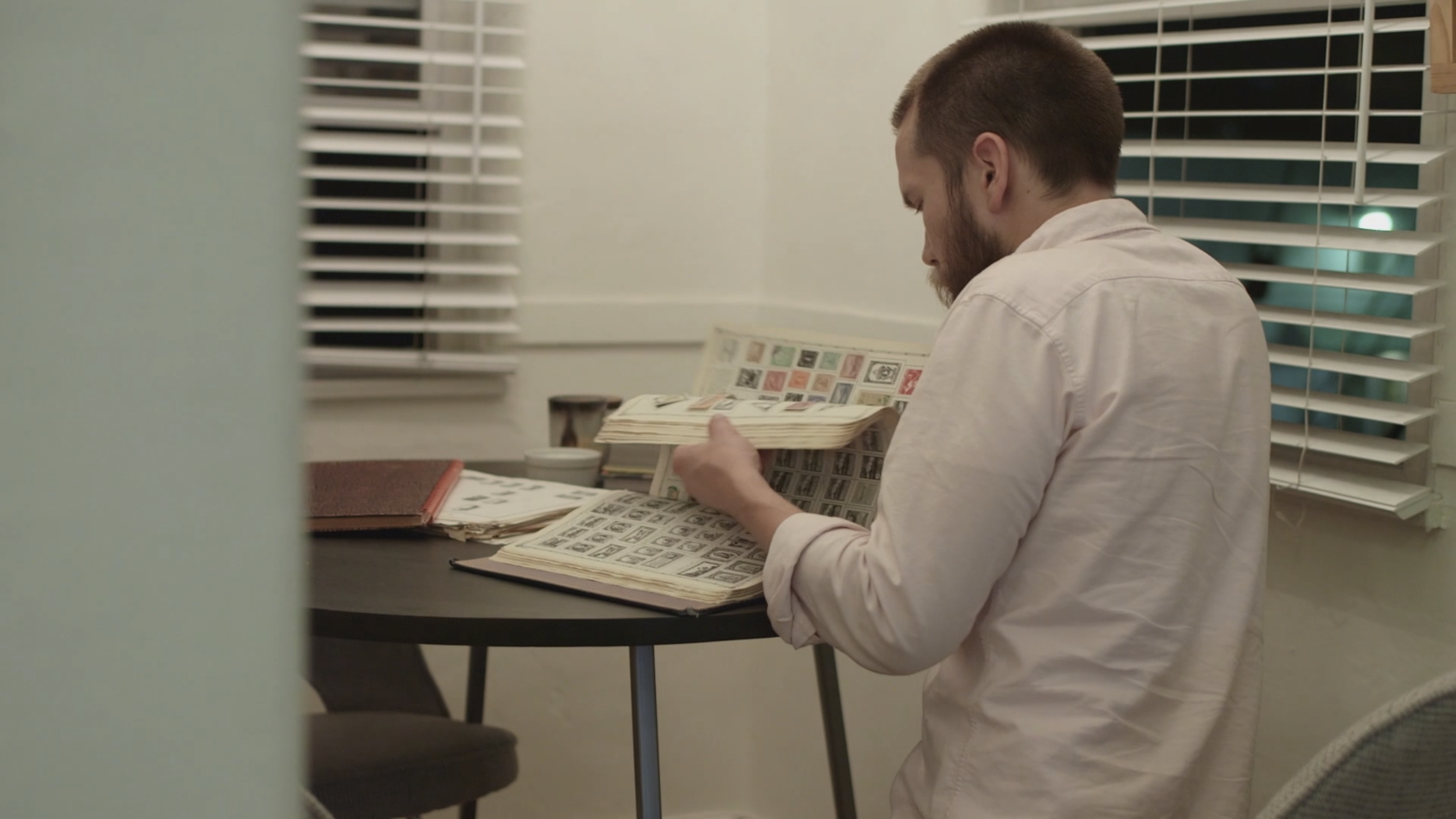
Will Cassayd-Smith, subject of The Penny Black

Will Cassayd-Smith, subject of The Penny Black

“The Penny Black” is a film noir filled with a million-dollar stamp collection that may or may not be stolen, a neighbor with a blurry past and a possible, but elusive tie to the Armenian Mafia.The film, named after the first adhesive postage stamp, will screen at 5:15 p.m. on Tuesday at Slamdance, is also a documentary in the film festival’s breakout category.It follows the plight of Will Smith, a young publicist who lives in L.A. One day, his neighbor, an imposing man from Russia, asks Smith if he could take care of a bag full of rare stamps for a couple of weeks.

Saunders, who met Smith through the film’s producer Alexander Greer, decided it would be fun to make a short film about some of the “crazy things that happen in L.A.” “It was just going to be a short slice-of-life documentary,” Saunders said. But after two weeks, the Russian, who lived in the next apartment from Smith, just disappeared. That was when Smith began examining the stamps.

Joe Saunders and Alex Greer prep the PI during filming of The Penny Black

Joe Saunders and Alex Greer prep the PI during filming of The Penny Black

“When we started researching and tallying things up, we began to realize very quickly things add up if you have a $36,000 stamp and then one that’s $60,000 and one that’s $25,000,” Saunders said.

That’s when Smith’s story got exciting, the filmmakers said.

“One of the elements of the story is who the strange Russian guy is, and whether or not we should be afraid,” Saunders said. “The more expensive the stamps became, the bigger threat he became, because we didn’t know what had happened to him. We didn’t know if he was coming back or if someone else was going to track Will down.”

That sense of danger is what Saunders and Greer wanted to convey through the film.

“Joe and I, in our filmmaking approach, are generally drawn to things that are interesting and a little extreme,” Greer said.

There are scenes of stakeouts and one of an uneasy meeting in a local bar, where Greer had to pretend he was a patron who was watching sports on the TV.

“I had a walkie talkie with a com in my ear, and I had to put my hood up to cover it,” he said. “I also had Joe’s iPhone so I could get some reverse (angle) shots, while Joe was in a car across the street shooting footage with a long lens.”

The two did hire a bodyguard to protect Smith and themselves during the bar scene.

“The bodyguard sat in another corner of the bar with another one of our friends, so he wouldn’t stick out,” Saunders said. “We did that just in case so we could feel a little more at ease.”

One of the things Saunders wanted to capture in “The Penny Black” was how the mystery unfolded,as Smith and they experienced it.

“That’s the only way we were able to tell the story,” Saunders said. “We wanted to recreate our own experience on this journey.”

The scenario became more complicated when Smith, while doing research on the bag of stamps, comes across a woman, Bonnie Collins, who claimed a large collection of expensive and rare stamps were stolen from her family.

Smith, doing his due diligence, decided to travel to Arizona to visit Collins, who claimed to have grown up with Freemasons and the Ku Klux Klan.

“Bonnie was very open and warm, but like a Bond villain before they open the (trap door),” Saunders said. “This could have been their stamp collection, but who knows, because there was no proof tying them to her.”

Through all the craziness and sense of danger, the filmmakers never thought to stop filming.

Early in the project, the filmmakers drafted up a document for production insurance.

“It laid out all the possible scenarios that could potentially happen that would cause injury or if someone tracked us down and stabbed us,” Greer said. “We called it ‘the document that our mothers could never see.’”

Greer’s father even voiced his concern.

“He sat me down and said, ‘Can you please stop doing this movie?’” Greer said. “We realized then if we were making something that terrified our parents, then we were onto something good.”

Saunders said the only time filming would have stopped is if Smith refused to do any more shooting.

“He kept going, even reluctantly sometimes,” Saunders said. “But it was all his decision.”

Adding to the documentary’s aura is the soundtrack by Drum & Lace, a musical project helmed by Sophia Hultquist.

“What attracted me to her music is that it has a dark and foreboding but also has a spacious landscape to it,” Greer said. “It carries a huge emotional weight, and it felt strongly suited to tell a story in this environment that is wayward and confusing.”

Saunders originally cut the film with music that fit a classic, film noir style.

“I decided against using it, because while the film is a mystery and we wanted to play with the noirish style, we didn’t want to hit it on the head,” he said. “We wanted to have something more modern with the score to accentuate the emotion, but keep away from the classic film noir sound.”

The music was the only thing that really went as planned with the film, Greer said.

“Every time we would plan to shoot a scene, we would sketch out what we wanted to do, but every time we went to shoot, something would always happen that wasn’t remotely near the list we had drawn up,” he said. “By the time we were near the end, we expected a curveball slider, and we got it.”

Exclusive: Trailer Unveiled for 'The Penny Black', "Documentary Noir" Premiering at Slamdance Film Festival

Joe Saunders' investigative thriller centers on estranged son of a conman, entrusted with a multi-million dollar collection

The_Penny_Black_Poster_V14_AW.jpg


Mystery pervades the story told in The Penny Black, the investigative thriller set to make its world premiere next week at the Slamdance Film Festival in Park City, Utah. 

Why would a shady Russian guy ask a neighbor he barely knows to hold onto a multi-million dollar stamp collection for him? Why would Will, the neighbor, agree? What is the deal with Will anyway--an inscrutable fellow who's the son of a conman and may have inherited some of his dad's dodgy traits? And how did a big portion of the valuable cache suddenly turn up missing?

These tantalizing questions cohere in the "documentary noir" directed by Joe Saunders and produced by Alexander Greer. The title, as any dedicated philatelist can tell you, comes from one of the rarest and most prized of stamps, first issued in the U.K. in 1840.

He's the kind of guy that you never know if he's laughing with you or at you. But you like him.

--Director Joe Saunders on Will, the inscrutable central character in The Penny Black

"I first met Will through [my producer] Alex," Saunders explains in a director's statement. "He was charming and smart, and always needed to be one step ahead of you. He's the kind of guy that you never know if he's laughing with you or at you. But you like him. So when he told an outlandish story of a Russian giving him a million dollar stamp collection, it sounded like he was challenging the table to believe him so that he could later mock us for doing so."

Saunders continues, "I, of course, took the bait. Either the story is real, and it’s fascinating on its own, or the story is fake, and it’s fascinating to watch this son of a con artist spin a web of lies to a table of friends."

​The trailer for The Penny Black premieres today in this Nonfictionfilm.com exclusive.

Screen Shot 2020-01-13 at 2.30.13 PM.png

The Penny Black debuts Saturday, January 25 at Slamdance headquarters at the Treasure Mountain Inn, with an encore screening set for Tuesday, January 28.

Saunders' documentaries have appeared on HBO, Fox, ABC, CBS, ESPN, the NFL Network and the BBC. His credits include Billy Mize and the Bakersfield SoundCoach Snoop and the Emmy-winning Big Charlie's, produced by NFL Films.

"The aim of this documentary was not to pursue a journalistic truth or to catch Will in a lie," Saunders notes of The Penny Black, "but rather to present the events of his world as they came to light. Will was ultimately the one steering the ship on this journey, so we as filmmakers were left to follow his path, however slippery or deceptive it might have been.”

The Traffic Show! on Funny Or Die

Screen Shot 2019-11-13 at 5.10.26 PM.png


Commuters, Good News: We Now Have A Reason To Enjoy Traffic

YOUR FIX FOR RUSH HOUR BOREDOM IS HERE

By Funny Or DieJoe Saunders, and Alexander Greer  Nov 13, 2019


Sitting in traffic is the hugest time suck of them all

At least other activities that “waste” time give something back to you. With video games, you get good hand-eye coordination practice or have to problem solve (not to mention exercise self-control to not shout at teenagers teabagging your recently deceased avatar corpse). With social media, you can shop, get a quick update from a friend, or hate follow your ex.

But sitting on your ass in traffic gives nothing back to you. It’s all take take take.

That’s where Alexander Greer comes in

The man, along with his GoPros, an iPhone and hand-held mic is here to bring some revelry to your rush hour commute. Bedecked in suit and tie — and a surprising willingness to put himself in harm’s way — the host of Funny Or Die’s The Traffic Show hops in your car during the 5:00 mess that is bumper to bumper traffic, and turns your car into a talk show studio.

Along the way, he uncovers surprisingly insightful truths. Like “What’s inside your glovebox says a lot about you.” Or “When picking up strangers, keep your protection items close by.” Or “Artificial intelligence, which is inherently non-biological, will eventually gender identify.”

It is our sincere pleasure to introduce you to our first guest.

Hey, Internet, meet Kerry

The most important things to know about Kerry:

  1. She owns a 2015 Nissan Sentra

  2. She’s from Ciabatta Bread, Indiana

  3. She has nothing in her teeth

Wait, is that the freeway...

Oh shoot you’re getting on the freeway — I don’t want to get on the freeway!! Aaaaaahhh!!!!!


CREDITS

Created, Produced, Directed, and Written by Alexander Greer and Joe Saunders
Production Assistant: Annie Mae Coleman

Follow THE TRAFFIC SHOW on Social:

www.instagram.com/thetrafficshow

www.facebook.com/thetrafficshow

www.twitter.com/thetrafficshow_

Snoop Dogg Youth Football Series Coming to AOL in May

'Coach Snoop' follows the rapper as he works with members of a youth football program.

Snoop Dogg is taking his talents to the football field in a new docuseries for AOL. 

Coach Snoop premieres on May 19 on AOL.com and will tell the story of the Snoop Youth Football League, which the rapper founded in 2005 to create opportunities for inner-city kids to participate in the sport. Snoop himself coaches a team of 11- and 12-year-olds and the series follows the team and its players over the course of a season. 

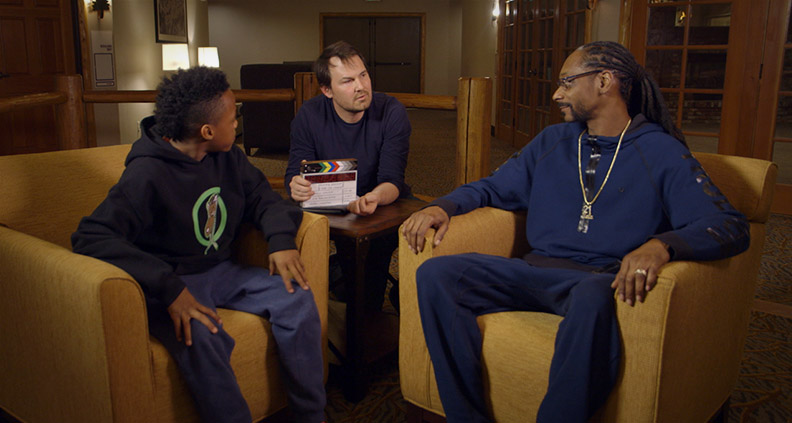
J-Roc, William J Saunders, Snoop Dogg (left to right)

J-Roc, William J Saunders, Snoop Dogg (left to right)

The series was first announced last fall and comes after Snoop has tried for years to get a project off the ground about his work with the SYFL. "This series will finally give the world a chance to witness the stories, talent and commitment SYFL represents in the same way I do," Snoop said in a statement when the project was first announced. 

Snoop will take the stage at AOL's May 3 NewFronts event in New York to promote the series through a performance that will livestream on AOL.com and go90 at 8 p.m. ET. This year, the Verizon-owned media organization will take over four blocks around New York's South Street Seaport for an immersive NewFronts experience.

All nine episodes of Coach Snoop will be available at launch on AOL. The series was directed by Rory Karpf (30 for 30). It was produced by Lauren Karpf, William J Saunders, Jeff Cvitkovic and Rob Harvell and executive produced by Snoop, Ted Chung and Rory Karpf. 

Watch the trailer here:

http://www.hollywoodreporter.com/news/snoop-dogg-youth-football-series-888357?mobile_redirect=false

From Bakersfield with Love - An Interview with William J Saunders

BM pub 40s 4.jpg

By Steve Karras

Anticipating Waylon and Willie’s outlaw country by a decade-plus, the “Bakersfield sound” sprouted in of California in the 1950s as a raw twangy riposte to the slick, syrupy sounds being ladled out of Nashville. Before Buck Owens and Merle Haggard made the Bakersfield sound famous (and the Grateful Dead, the Byrds, and other country- and roots-influenced ’60s bands rocked it up), its seeds were carried west out of the Dust Bowl by Depression-era migrants, planted in Central Valley honky tonks, and nurtured by The Cousin Herb Henson Trading Post TV Show, which hit local airwaves in 1953 and featured a rich-voiced singer, guitarist, and songwriter named Billy Mize.

From his TV perch Mize helped launch the sound out of Bakersfield, and he remained a recording artist and West Coast radio and television personality into the 1980s. But his influence exceeded his fame, and his life was scarred by tragedy: two sons died young, and a stroke at age 59 robbed Mize of his ability to speak and sing. His life, his singular impact on country music, and his painstaking effort to regain his voice are chronicled in Billy Mize and the Bakersfield Sound, a music documentary that more than most deserves to be called a labor of love: director William J. Saunders is Mize’s grandson. After a lengthy festival run the film came out on DVD and VOD last month (and it screens this weekend at the Macon Film Festival in Georgia). This is an edited version of an interview with Saunders by Chicago-based freelance writer, filmmaker, and friend of MFW Steve Karras; click here to listen an uncut audio version, done for the Chicago International Movies & Music Festival.

Steve Karras: What you had done prior to making this documentary?

William J. Saunders: I used to work at NFL Films, that was kind of my first job out of undergraduate. I was a producer there, making football documentaries, off-the-field stuff – stories on fans, stuff like that. I’d always wanted to go into fiction, and to do that I ended up going to graduate school at Columbia University. I started this documentary while I was there, as something that I knew needed to be done and [that] I wanted to do, before these gentlemen were too old to be able to interview. Some of them were passing away at the time.

Where did you grow up?

I split time between San Diego and Kansas City. I went to high school in Kansas City, so I say I’m from there. I was never really a fan of country music, and Billy didn’t have his ability to speak most of when I was growing up, so I didn’t really know a whole lot about him or his musical influence, or the Bakersfield sound in general. It was all discovery for me.

billysingsretouch1.jpg

You go into a project like this and you don’t anticipate what it’s going to do to you on an emotional level. At what point during the production were you having epiphanies? Did that start from the beginning?

It was the whole thing. It seemed to evolve really slowly, but it seemed like every step I took I uncovered something more interesting than the last. I guess that’s really good if your making a film [laughs]. I didn’t know much, you know? As I was growing up, there wasn’t the access of the internet. There wasn’t a lot of information readily available on this subject, and there hasn’t been a lot written on it. There’s been one TV documentary, for PBS, I think, which came out ’95 or something. I really had to look to find that one. So every time I learned a little bit more about Billy’s life, a little bit more about the Bakersfield sound, it kept getting more and more exciting.

Did you notice doors opening up a little quicker because of his reputation preceding him?

Yeah. You know, obviously I had heard that Billy, my grandfather, had some ties to Merle Haggard. I didn’t realize how deep that went. I found out when I just put in the request to interview him and it happened right away. Merle was more than gracious in helping out. And talking to people like Willie Nelson and Ray Price about my grandfather and them just praising him – it was really incredible. I thought a lot about the fact that I was his grandson interviewing these guys and maybe they’re just sugarcoating stuff because I’m his relative. I tried to make sure that didn’t happen by prefacing things with, “I need to know the full story of Billy Mize, please tell me the truth as you know it and stick to that. I want to know all about the guy.” But people just continued to tell me these fantastic things about him – how great a person he was, how charismatic, how wonderful a musician he was. There’s really not a lot of bad stuff to say about Billy Mize.

What can you tell me about the difference between the Nashville country sound and theBakersfield sound? It’s almost like a different American experience.

Everyone has, and I’m sure you do too, a different understanding of what that is. Everybody I asked had a different answer. My conclusion is that it’s just a label that was put on these individual musicians that shook the cage a little bit in country music – Buck Owens, Merle Haggard, Billy Mize, and those guys who came out of that scene. They were all playing different types of music. You would say Billy Mize is part of the Bakersfield sound, and literally he was, but he wasn’t playing that Buck Owens-style music. He sang very smooth, more like the Nashville country that was more popular in his time. People say there’s a literal meaning of the Bakersfield sound, they know it when they hear it. I really just think it’s a label that’s been put on those individuals that rebelled against the Nashville sound.

There were a lot of great verite moments in your film about your grandfather. I was thinking about Albert Maysles’s style. Were you a fan of that direct cinema approach?

I am. It’s obviously all subjective, and I do have my opinions, but I do think documentaries are at their best when they are documenting. I’m not a big fan – I mean, I’ll watch a documentary that’s all about re-creations, people talking about the past or something, those are interesting and those have a place. But I’m more interested in documentaries that are unfolding as we watch them. I couldn’t do that in a lot of places with this documentary, obviously. It was really important to me to get all of that archive footage, and a lot of it is being shown for the first time in this documentary – some of the Cousin Herb stuff and The Billy Mize Show, some of his other TV. [But] I was very aware of those verite moments and wanted, as much as I could to put all of those in.

Beyond his general accessibility because of you being related, did it take him a while to warm up to you making this film?

Joe Headshot.png

Not at all. He was on board right away. I think he was a little flattered that I wanted to make this piece on him. I don’t think he realized how long I would be working on it [laughs], or the extent to which I would go to research it. And there’s a lot of his personal life that comes out in this documentary, and I don’t think he understood that that was going to be just as important as far as the story was concerned as the rest of it. When we started talking about the more sensitive issues, tragedies that happened in his life, he pulled back sometimes and doesn’t talk about a lot of it. But he was always very willing. He’d always say, “Whatever you need.”

Are you a country music fan now?

I’m a fan of that music. One of the guys I interviewed for the documentary, Scott Bomar, just produced an album called The Other Side Of Bakersfield, a collection of Bakersfield B-sides, and and it is great. You can really kind of see what the barroom was like with this kind of music – real raw, just a few musicians pumping out some dance music. I’m a huge fan of that stuff.

By Steve Karras

For the Country Record

Sometimes legends get lost in the annals of time, still legendary to those in the know, but increasingly forgotten within mass popular culture. ‘Billy Mize and The Bakersfield Sound’ aims to change that for its subject, a principle performer and television personality in an acclaimed era of country music. Billy Mize was born in Kansas during the Great Depression, and like many other families, they were forced to migrate to Bakersfield, California, in search of jobs. This migration found many different styles of music from varying states culminating in one small area, and Billy Mize became a founding member of what would become to be known The Bakersfield Sound.

This feature-length documentary film, directed by Joe Saunders, begins on the cusp of Billy’s 80th birthday, back in April 2009. There is to be a tribute show on his birthday by friends, peers and more, and we find him reflective but in high spirits. It is clear from the outset that Billy has problems speaking; we later discover that it’s due to a very bad stroke he suffered during the mid-1990s, the culmination of a drinking problem following many years of hardship.

Although this documentary goes into depth on what Billy, and his ex-wife Martha, overcame in life (including the loss of two sons at the prime of his career), it also is an extremely informative answer to the question of “Who is Billy Mize?” With interviews from many of the pioneers of the time, including Merle Haggard, Willie Nelson and Ray Price, we find ourselves taken back in time to the beginnings of Billy’s career and how he became the legend that he is. Filled with countless songs and performances (the credit list took over a minute to list them all), amazing insights into the scene and how it impacted country music as a whole, as well as rare footage and commentary from Billy himself, this is a fantastic look into the life of the man who should have been bigger than Buck Owens.

Watching this movie was fascinating, entertaining, heartwarming and a little heartbreaking too. Around 90 minutes in length, I would happily watch it again and again, which is not something I can say about a lot of films. Currently you can purchase the DVD, which has special features, or you can host a screening of the film at your local theater or community venue. Click here for more details.

It’s no surprise that this movie has had critics enthralled at festivals all over, so be sure not to miss this great addition to your collection of country music in film.

http://forthecountryrecord.com/2015/06/05/billy-mize-and-the-bakersfield-sound-the-movie-review/#more-14291

Billy Mize Compelling

BY JENNIFER SELF The Bakersfield Californian jself@bakersfield.com

The temptation to liken the life of Billy Mize to one of the melancholy country songs he wrote is a potent one -- except that no one would ever write anything so damned sad.

Unthinkable family tragedies, one after another, medical setbacks and a stroke that prematurely ended his career offer a pretty compelling case that Mize just may be the biblical Job of country music.

Filmmaker Joe Saunders reports he's just signed a deal with a company called Cintic to distribute the movie. "It looks like we'll be distributed digitally via Film Buff (its sister company) who will put us on all digital platforms in early 2015," Saunders wrote in an email. "And they are out looking for TV opportunities, etc."

Saunders, who will be at the Fox screening, reports that though Billy Mize won't be present, his brother, Buddy Mize, who provides insightful commentary throughout the movie, will attend.

"It's got to be hell to be a singer and one day you've lost it all and you still know that," reflects Buddy Mize in a film about his brother. "You still have the mind and you know the singing, but it doesn't happen anymore."

How is it then that "Billy Mize and the Bakersfield Sound," a documentary made with obvious love by the performer's grandson, is anything but gloomy? Bittersweet, yes, but the emphasis is more on the sweet than the bitter.

The film, which had its Bakersfield premiere in September before a packed house and affectionate audience at Buck Owens' Crystal Palace, will be screened Friday at the Outside the Box Bakersfield Film Festival.

Filmmaker Joe Saunders conducted more than a dozen interviews with music historians and Mize's friends, family and fans, including legends of the genre like Willie Nelson, Ray Price and Merle Haggard, the biggest star to come out of Bakersfield, who owes his first television appearance -- a snippet of which appears in the film -- to Mize.

Haggard, especially, is effective in getting across the central theme of this character study: Billy Mize might have been a superstar if not for his decision to forgo the all-consuming pursuit of fame for a stable home life with his family.

"Billy Mize is this incredibly talented, multifaceted, good-looking guy that probably should have been a star, a big star," singer/songwriter Dave Alvin says in the film.

But Mize, 85, did manage to stand out in Bakersfield, and that was no small accomplishment. It seems impossible that the southern valley of the 1950s and '60s, full of cotton pickers by day/guitar pickers by night, should have been a capital of country music. But as the captivating images and performance clips in the film make plain, the town was jumping -- There's Bill Woods at the Blackboard! It's that kid Buck Owens at the Lucky Spot!

It's in these moments that the film soars, reminding fans who didn't realize they needed reminding that this vital music does not belong behind museum glass, spoken about in hushed, reverent tones. The music is as fresh and bracing as it was 50 years ago, a loud and vital alternative to the snoozefest that was -- and is -- Nashville.

These handsome mischief-makers, with their pompadours, wicked grins and talent to spare were every bit as exciting and dangerous as their rock contemporaries. And Billy Mize? He was the most Elvis-like of them all.

"Billy was a handsome kind of cat," Ray Price observes in the film. "I'm sure he didn't have any problems with women. In fact, that probably was his problem."

One woman he couldn't get enough of was wife Martha, who caught his eye on the school bus when they were children. Each appears to be the other's biggest admirer in spite of their divorce decades ago. In fact, some of the film's best insights come from Mize's ex, not to mention most of the laughs -- and there are many, courtesy of wits like Red Simpson, Cliff Crofford and Mize himself.

An exchange between the couple that drew hoots at the Palace came after a story Buddy Mize tells about his brother breaking into music at the Lucky Spot, though he was still too young to work at a bar. The venue got around the problem by hiring Buddy and Billy's mother as a bouncer:

Billy: "My mother said don't drink."

Interviewer: "Did you?"

Billy and Martha: "No, no."

Martha: (waiting a beat) "I did."

Martha also offers the perfect scene-setter for how rough and tumble those old honky-tonks could get:

"The very first night I was there, one of the band members' wives put a customer's head down the toilet in the ladies' room and I was horrified. Absolutely horrified. Because I thought we were just going to go to the ladies' room like little ladies."

Yet even in the barroom bedlam and later, when he was host of a succession of Bakersfield and Los Angeles television programs, Mize was able to maintain a depth and gentleness that set him apart.

"I didn't talk to anybody about Billy that didn't like him. Not one," Bakersfield Sound author Gerald Haslam says in the film.

"I talked to a lot of people that didn't like Buck. But everybody liked Billy."

Much of that admiration can be traced to the grace with which Mize has handled the tragedies that have befallen him, paticularly the death of both of his sons, and his health problems. The film starts and ends with Mize's struggle to recover his speech, his frustration palpable.

"I know what I want to say, but I can't talk."

But this is not a film about the indignities and injustices of old age. Mize's resilience is the takeaway, and nowhere is his strength more evident than in the film's closing moments -- which won't be revealed here. It will get you dancing in your seat even as it pierces your heart.

Big Charlie's Saloon

Pulbished by Yahoo Sports 9/18/13


The subject of William J Saunders EMMY award winning documentary is back in the news.  Enjoy! 

Big Charlies.jpg

PHILADELPHIA – Deep in a thicket of South Philly row houses where 11th meets McKean, and the butchers, barbers and grocery men still keep their grandfather's shops, there stands a most unusual corner football bar called Big Charlie's Saloon.

From the outside there is little to separate Big Charlie's from the dozens of other corner football bars in South Philly. It has the same brown brick facade and oversized square sign above the awning. But look close and notice the absence of the requisite Philadelphia Eagles, whose gleaming stadium is but a mile away. Big Charlie's doesn't run gameday bus and keg trips to Eagles games. You won't find wings on the walls or the local football team on Big Charlie's flat screen TVs.

From left, Domenick Berardi Jr., Paul Staico and Michael Puggi are die-hard Chiefs fans in the unlikeliest spot. …

Because if you walk into Big Charlie's on a football Sunday and meet the cold, probing glares that greet strangers, you better say you are there to see the Kansas City Chiefs or you'll probably want to leave.

None of the traditional reasons explain why a Kansas City Chiefs bar exists in the grumble of South Philly. Paul Staico, the bar's owner, is not from Missouri. He grew up a few blocks away on Hutchinson Street which runs between 9th and 10th. The bar originally belonged to his father, Big Charlie, who had no real affinity for anything Kansas City or anything Chiefs. Nor is Staico one of these people who grew up hating the Eagles and wanted to cheer for another team.

Rather, this is about a bike. A Huffy bike. The kind a 4-year-old Paul dearly wanted in the winter of 1970 when Big Charlie threw down a hefty bet on that year's Super Bowl. Big Charlie promised Paul he would buy him the bike if his big bet came through. Then when it did and the Huffy bike was his, Paul made a promise too. He would love the Kansas City Chiefs.

"After that, all my presents from my mother and my sister and my friends, they all gave me Chiefs stuff," Staico says.

His friend Domenick Berardi Jr. laughs.

[Play fantasy football on the go: Real-time scoring and more on iPhone and Android]

"The funny part is how he actually acts surprised when he gets Chiefs stuff," he says. " 'Oh wow my 400th Chiefs mug.' "

The men laugh. They are sitting in the back bar at Big Charlie's, which is more a shrine to their team than a serviceable drinking place. The walls are filled with Chiefs photos, a Chiefs logo is painted on the floor, a row of Chiefs helmets dangle from hooks. In South Philly, where folks debate daily the fate of their "Iggles," it is a most improbable sight.

Staico looks exactly how you would think a Paul Staico from South Philly would look, wearing a sleeveless Chiefs T-shirt with giant tattooed arms and a booming voice. Berardi, smaller and quieter, wears a Chiefs golf shirt and Chiefs cap. They are "family" as Staico likes to say. For instance, Berardi is his brother and Michael Puggi, who is sitting against the wall wearing a red cap, is his cousin even though none of the men are related.

Paul Staico shows of his ink and loyalty. (Y Sports)

"Our home away from home," Puggi says.

This is an important week for Big Charlie's. People have been calling the only Kansas City Chiefs bar in South Philly because the Chiefs are coming to play the Eagles on Thursday night. And that means Andy Reid, who took the Eagles to five NFC championship games and a Super Bowl in his 14 years as coach of the Eagles, is coming back as the head of the Chiefs.

At Big Charlie's this qualifies as a really big game, which means Staico will have a cookout outside and as many as 70 Chiefs fans will pile into the bar to watch the game. They're going to block off the street and the NFL Network will broadcast some of its pregame show from the sidewalk out front.

The men at Big Charlie's seem delighted that Reid is their coach. While they didn't watch Eagles games much during his time in Philadelphia, they know enough about his success with the Eagles. It would be impossible to live in South Philly and not understand this. They talk vaguely about the Chiefs moving "in the right direction." Still, even with this optimism, they say little about Reid and his return.

The most any of them say comes from Puggi who thinks Reid was: "A really good coach [for the Eagles] but the last couple of years he looked burned out."

[Watch: Big questions about former Eagles' big night]

Big Charlie's has gained fame over the years as the Chiefs place in the most rabid of Eagles neighborhoods. The Chiefs have a wide and passionate following in the Midwest and the story of Big Charlie's has made its way to Kansas City, where Staico, Berardi and Puggi are treated like mini celebrities when they make their yearly pilgrimage to Arrowhead Stadium to watch their beloved team up close.

Several years ago, when Dick Vermeil went to Kansas City to coach the Chiefs, Joe Saunders, the son of Vermeil's offensive coordinator, Al Saunders, landed a job at NFL Films. Looking for a place to watch his father's team play, Saunders drifted into Big Charlie's. In a return visit, he brought a crew from NFL Films. Big Charlie's had to be shared. He even arranged for Vermeil to magically appear to the delight of the people gathered in the bar. The resulting video won an Emmy, a copy of which Staico proudly displays as a memory of the day his bar went Hollywood.

Derrick Thomas, the great Chiefs linebacker who is one of Staico's favorite players, once sat in Big Charlie's back bar. When Rich Gannon, who was raised in Philadelphia, was the Chiefs quarterback, his family watched the games from Big Charlie's. Gannon's father, Jim, enjoyed Big Charlie's so much he was criticized on local radio for not attending a Chiefs-Eagles game his son played in 1998 to watch it at Big Charlie's instead.

But no one from the Chiefs may have made a bigger impact at Big Charlie's than the recently fired general manager Scott Pioli, who visited in 2009 when the Chiefs came to play the Eagles. Pioli walked into the bar, flanked by two beefy team security men, and was immediately touched. He later told Staico that he called his mother after the visit to say he had been to a place that reminded him of his old neighborhood.

When Staico's mother, Millie, died last fall – Staico remembers the date (Oct. 28), a day the Chiefs played the Raiders – Pioli heard of her death and sent flowers.

"He's a gentleman," Berardi says of Pioli. "Classy. Very respectful man."

Which appears to be a big reason why the men at Big Charlie's don't celebrate Reid publicly. They want to be respectful to the general manager who had been good to them.

It's hard to understand how a group of men from the same Italian neighborhood in South Philly became fans of a football team halfway across the country. The best way Staico puts it: "All our friends converted." He goes on to say that a few of the people he knew growing up, whether it was at the playground or school, were not Eagles fans. They were looking for a new team. Thanks to his Huffy bike, Staico had a team. One by one, he dragged them over to the Chiefs.

Staico is clearly the leader. He booms through the bar in camouflage pants and that sleeveless Chiefs shirt. He shouts when he talks. And though his voice is a rumble, he can be soulful. He asks people about their lives and he seems interested in their answers. It's easy to see how if he picked the Kansas City Chiefs to be his team the others would follow. And if he wanted his bar to be a Chiefs bar, who was going to question him?

In the beginning, Big Charlie's wasn't a Chiefs bar. In fact, Staico kept his Chiefs passion confined to his parents' house, where he watched games that he pulled down on a rooftop satellite dish. It wasn't until Big Charlie died of a heart attack in 1983 that Staico began converting the place into a Chiefs haven. At first it was tough. In a pre-Sunday Ticket world he had to get a dish installed on Big Charlie's roof. Then he had to hope he could find a feed from some station in Denver or Des Moines that had been left unscrambled by the networks.

"It would take hours and hours," Staico says. "We were sweating it out."

Even after they found a game on the satellite they couldn't always keep it on, especially on windy days. For one particularly big Chiefs game against the Raiders in 1989, Marty Schottenheimer's first year as coach, they promised a neighborhood kid named Vinnie a bottle of Jack Daniels if he stood on the roof in a rainstorm and held the dish in place. The Jack Daniels proved irresistible and the game was on. Though every once in awhile Vinnie's grip slipped and someone had to go outside and shout: "A little to the left" or "A little to the right."

There are also strict rules, one of the biggest being that Big Charlie's does not play music during a Chiefs game. Doing so is a sin. But nonetheless, as the Chiefs built a big lead in a game, Puggi couldn't help himself. He wanted to dance so he turned on the jukebox. Almost immediately the Chiefs collapsed, eventually losing the game they were certain to win. Staico and the rest of the Big Charlie's crowd knew exactly who to blame.

The next week they banished Puggi from the bar. It was raining, much like the day Vinnie stood on the roof holding the satellite dish, but a banishment was a banishment. They put a chair outside and handed Puggi a pair of binoculars. Every few minutes someone opened the door and allowed Puggi a glimpse of the TV.

Nobody thought it a heartless punishment. Not for costing the Chiefs a game.

"I gave him an umbrella at halftime," Berardi says.

[Related: Will Philly fans cheer Andy Reid when he returns?]

The men claim to have photos of Puggi in the chair, yet when asked to produce them they get vague. They can't find them, they say, leaving one to wonder if it really happened or is part of a bar's legend that has become a spectacle in itself.

One thing Staico is serious about is violence. He won't tolerate it. Thanks to a certain contingent of fans at Eagles games, Philadelphia has a roguish reputation. Staico hates this. His bar might be in South Philly and South Philly can have its rough edges, but a great source of pride for Staico is that Big Charlie's has never had a fight in its four decades of existence. He wants to keep it that way.

Part of the reason for this is that it's a neighborhood place where people of all ages come. Among the regulars are people in their 70s who have been venturing to the bar back when it was under Big Charlie's rule and didn't have a single picture of a Kansas City Chief. At the hint of a dispute, the combatants are led outside and told to go elsewhere.

"If you act a certain way you're in the minority," Staico says. "You can't act like that in here. There are women in here. Elderly. Look, it's no romper room, believe me. But you will be asked to leave."

The NFL Network is scheduled to make a stop at Big Charlie's on Thursday, when the Eagles host the Chiefs.

And nobody wants to leave. If you are going to go to the trouble to live in South Philly and love the Kansas City Chiefs you are not going to get tossed from the only place that will take you in.

Where else are you going to find a place like Big Charlie's? Where else will you have a glass cabinet filled with Chiefs photos, mugs and bobbleheads? Where else will you find a giant photograph of Arrowhead Stadium on the wall and team logos on the bar stools? Where else does a piece of the Midwest wind up in the land of the Eagles?

Staico smiles and looks around his kingdom of Chiefs red and gold.

"You know it was never meant to be anything more than it was," he says with a hint of wonder in his voice. "Now it's taken off."

All of this for a bet and a Huffy bike.